

Context
The project involved the development of a new centralised supplier management system to replace manual processes, Excel spreadsheets and disparate stand-alone solutions. The aim was to bring together procurement, supplier data management and operational collaboration on a single integrated platform for the first time, thereby significantly increasing transparency, efficiency and traceability across all supplier processes.
The tool includes, amongst other things, a vendor overview, framework agreements, forecasting, a contract award preview, a central address book and onboarding management, and maps numerous interlinked processes within a consistent system.
Initial situation & product objective
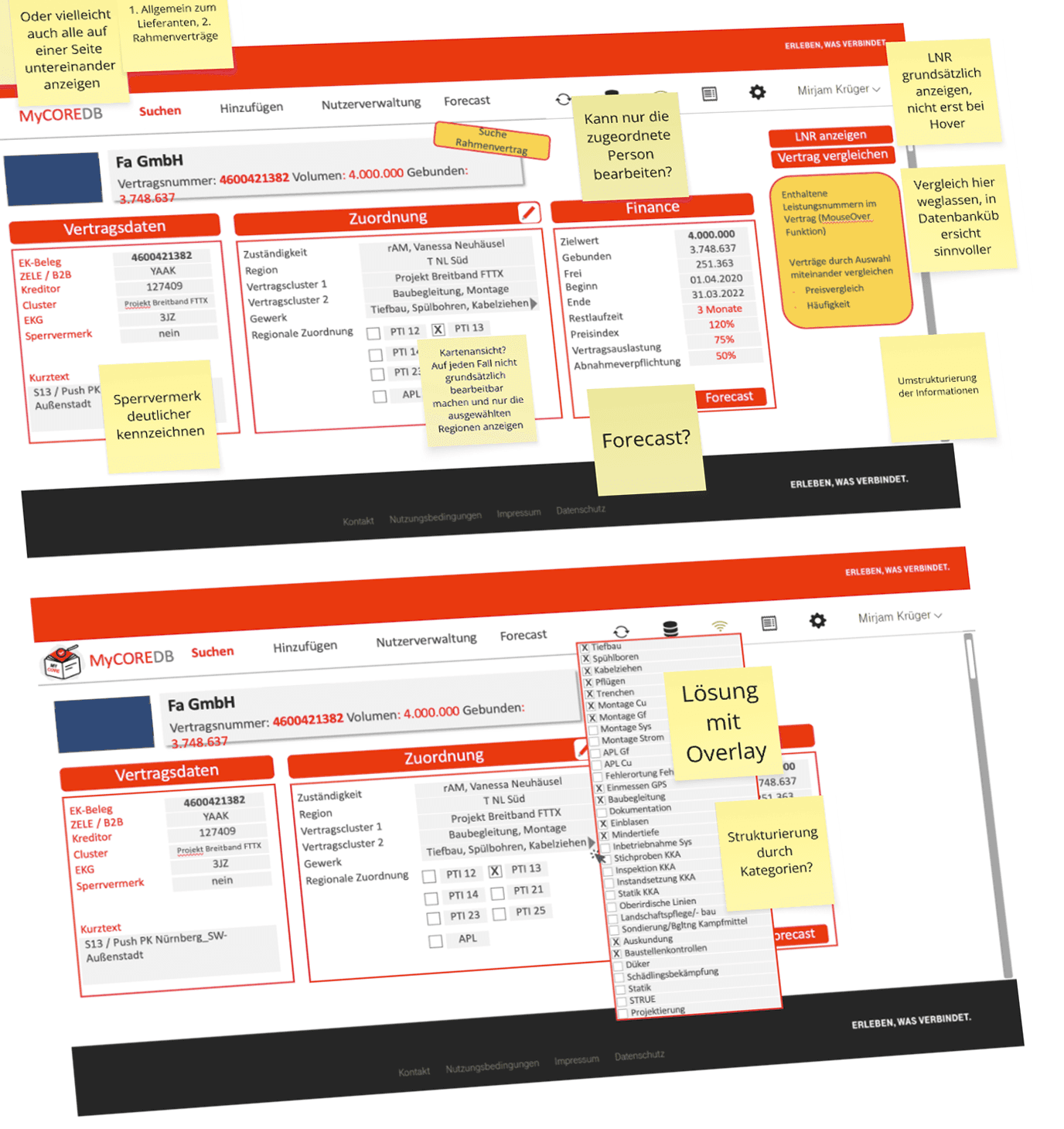
As there had been no integrated, uniform solution for supplier management up to that point, processes, information and responsibilities were spread across multiple tools, Excel lists and manual procedures. Analysis of these existing working methods and the identified media breaks formed a solid basis for defining the requirements and a consistent target vision.
In addition, business and product goals were defined:
Business objectives
Central database for supplier information
More efficient procurement and coordination processes
Greater transparency regarding status, risks and services
Reduction of manual maintenance and sources of error
Product objectives
Uniform platform for all supplier processes
Clear structure for complex data models
Support for standardised workflows
Scalable UX as a basis for further modules
Core UX challenges
Mapping high data complexity in an understandable way
Diverse supplier data, extensive lists and complex evaluations had to be clearly arranged and quickly accessible, including good mobile usability and barrier-free interaction.
Consistently support different user roles
A comprehensive role concept required differentiated views, rights and interactions without unnecessarily fragmenting the operating logic.
Establishing transparency regarding status and processes
Process statuses, dependencies and responsibilities had to be clearly traceable at all times in order to facilitate operational coordination.
Ensure platform scalability
As the first module of a planned system landscape, the UX architecture had to be designed to be expandable from the outset so that later functions could be seamlessly integrated.
Approach & Methodology
Understanding the problem & objectives
Analysis of existing requirements, documentation and preliminary wireframes provided by the customer to clarify key objectives, core workflows and critical usage scenarios.
Research & Insights
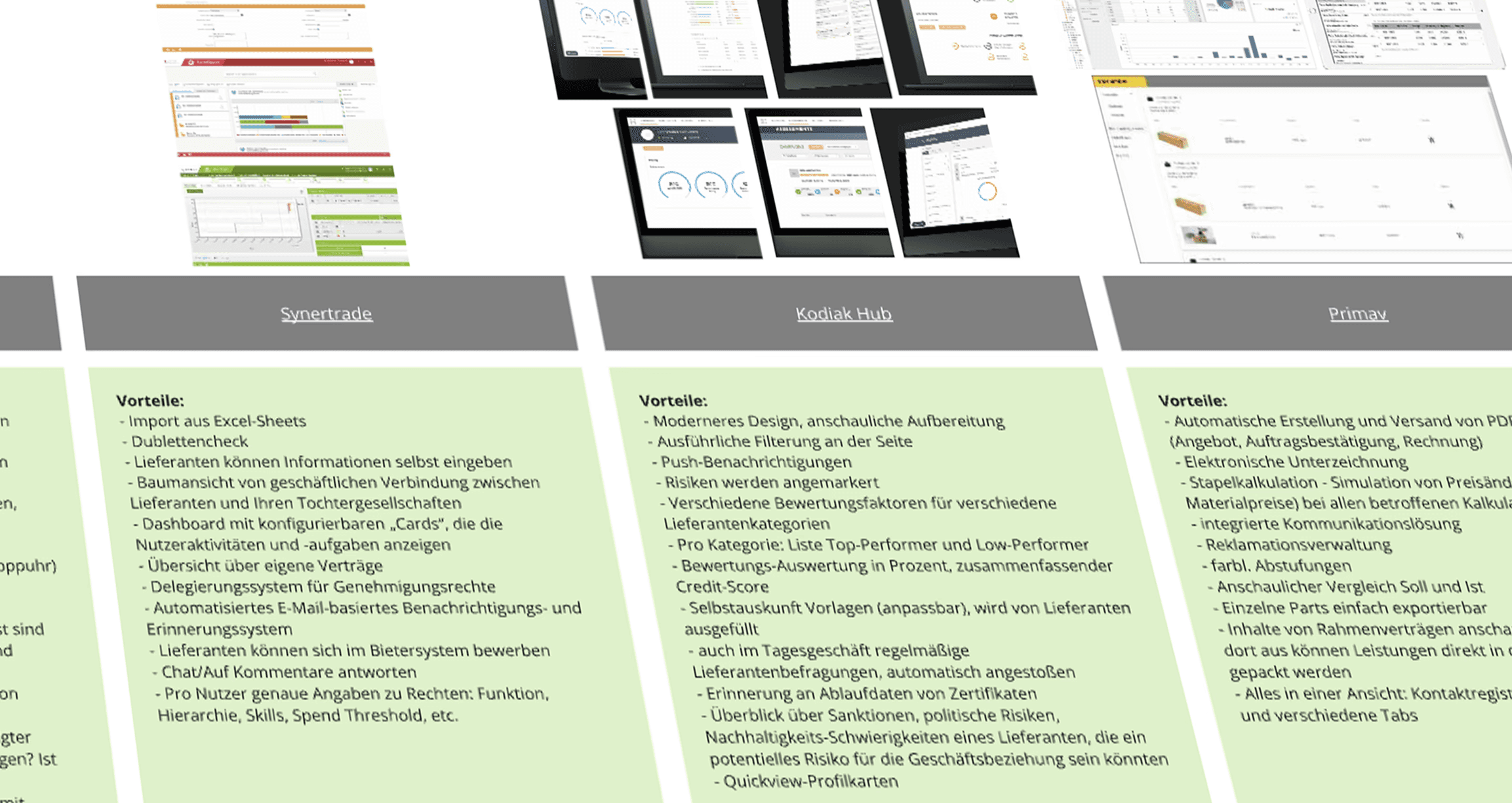
Analysis of comparable B2B and enterprise systems as well as interviews with purchasing, specialist departments and operational users to derive relevant UX patterns and best practices.
Target group research
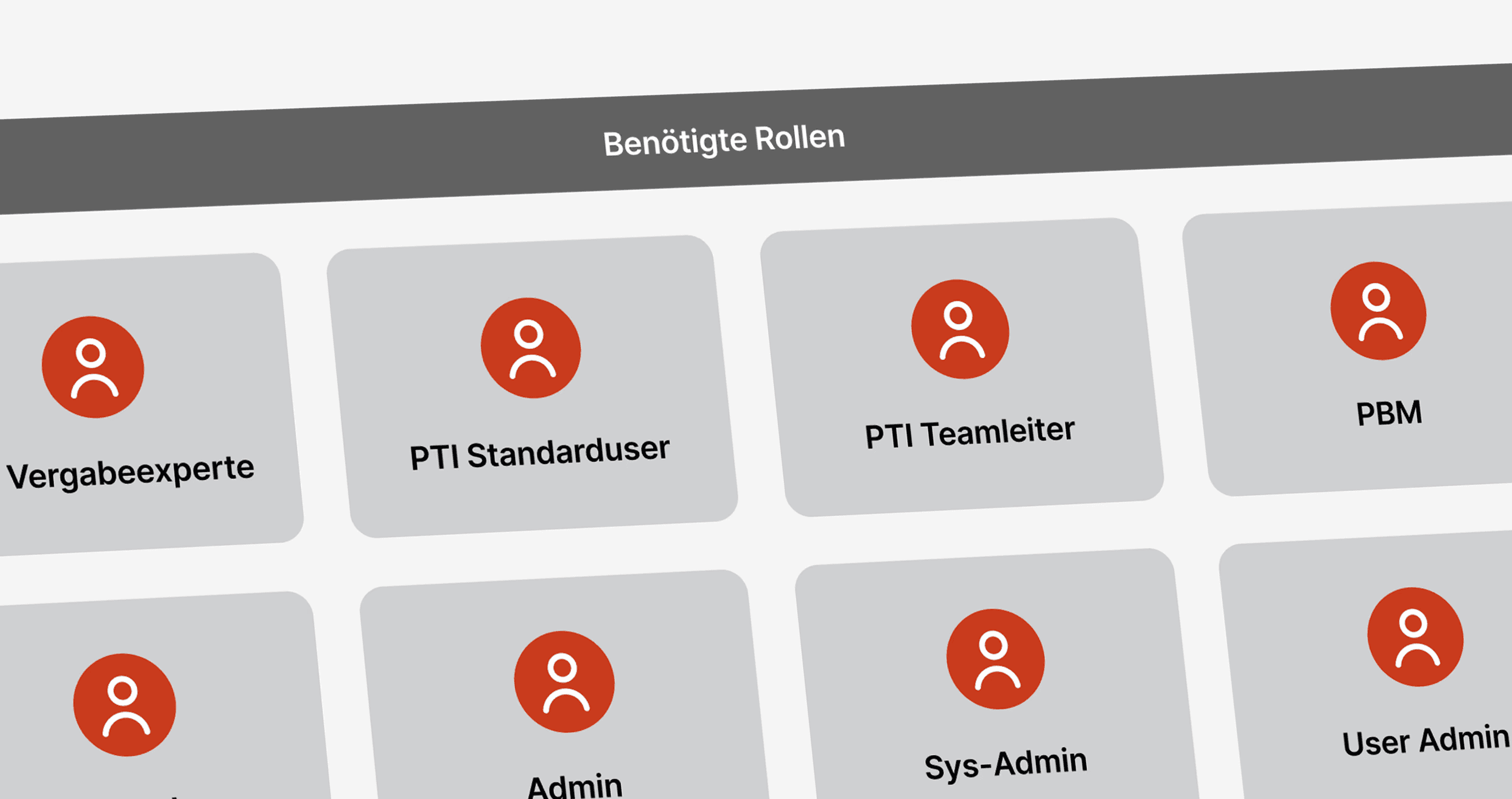
Identification of key roles and usage contexts based on existing processes and system access, as well as derivation of personas and core journeys as a conceptual basis.
Structure & IA
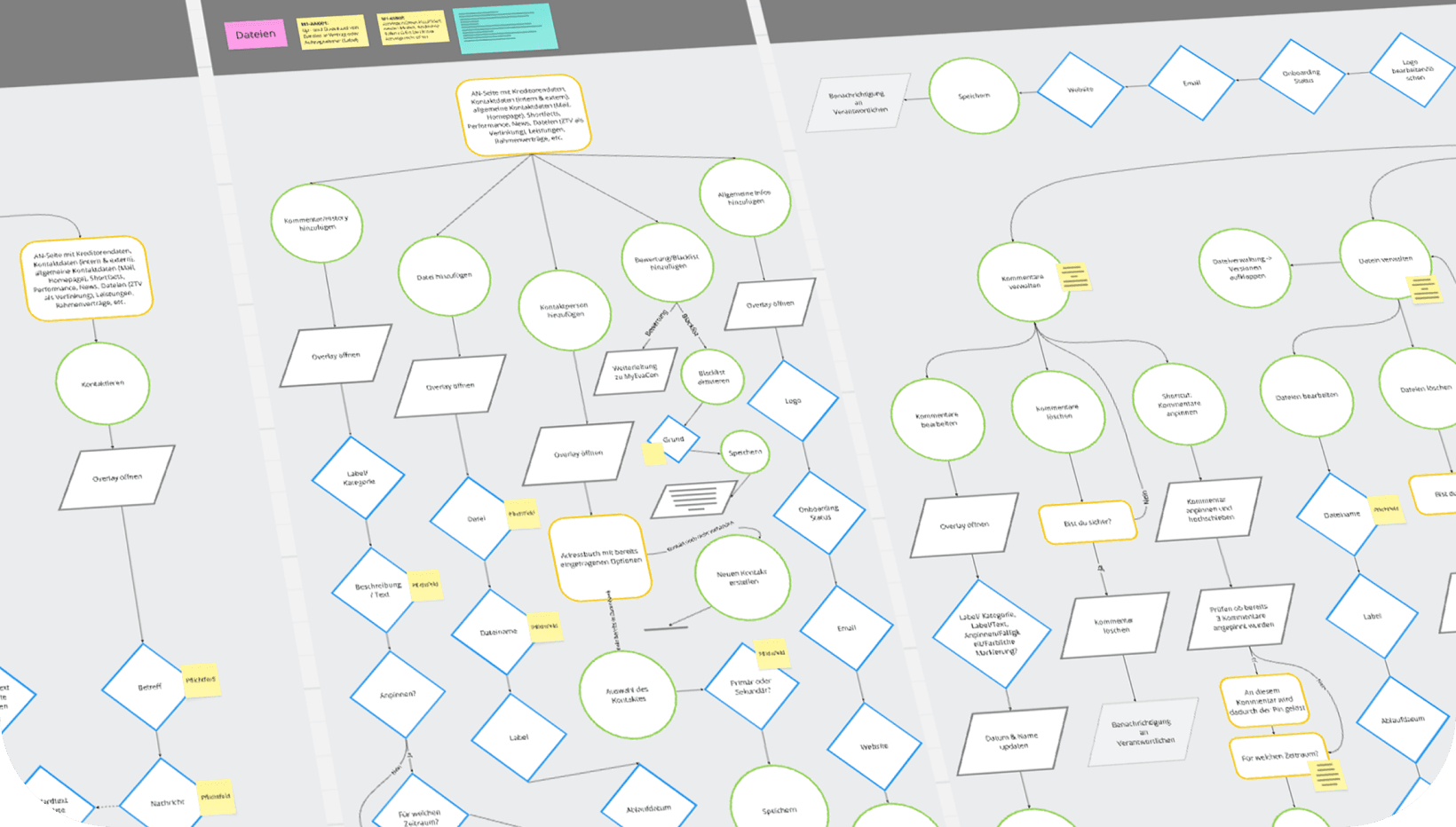
Structuring and prioritising key functions according to MVP, MVP+ and out-of-scope, as well as developing a scalable information architecture based on clearly defined use cases.
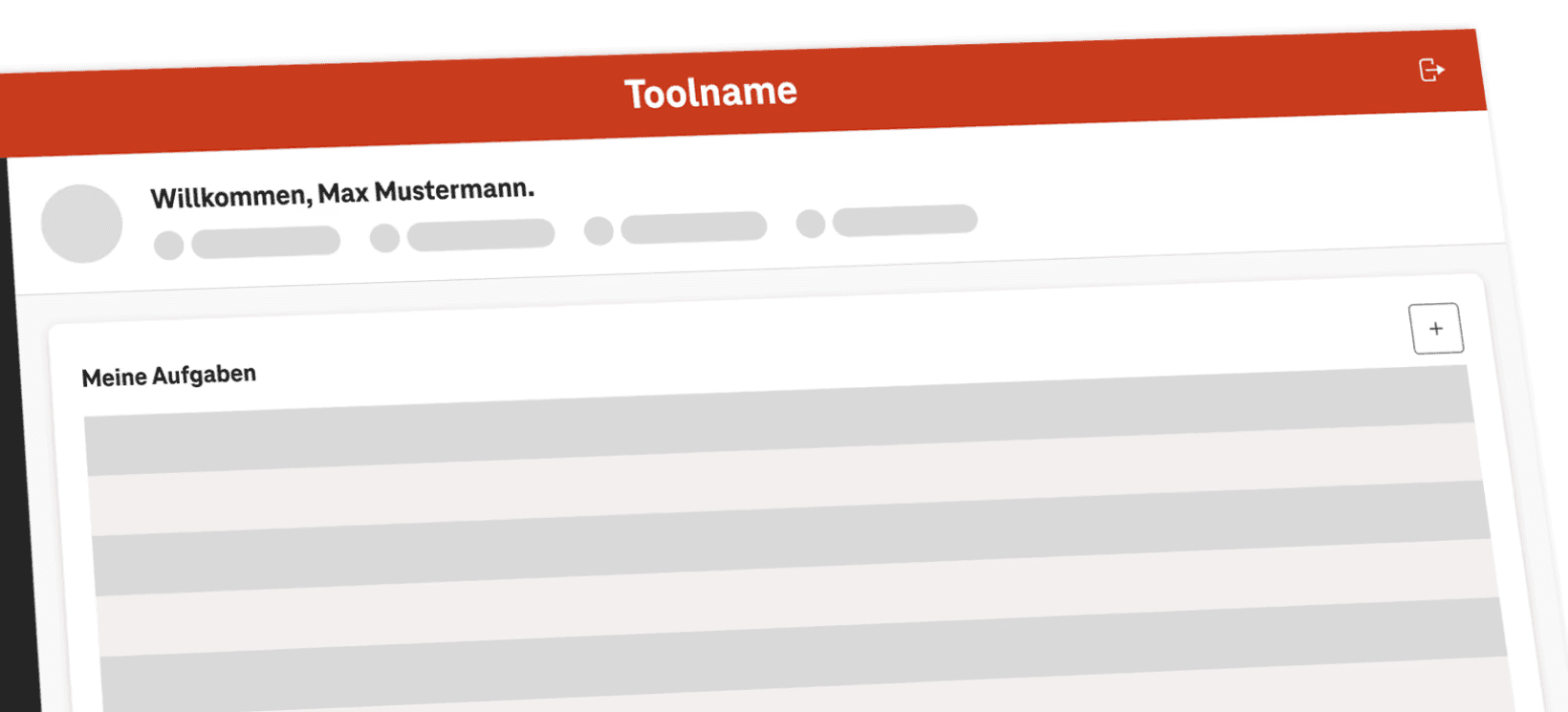
Rough concept & wireframes
Creation of iterative wireframes as a basis for discussion and decision-making for structuring complex content and central workflows, as well as for coordination with product and development.
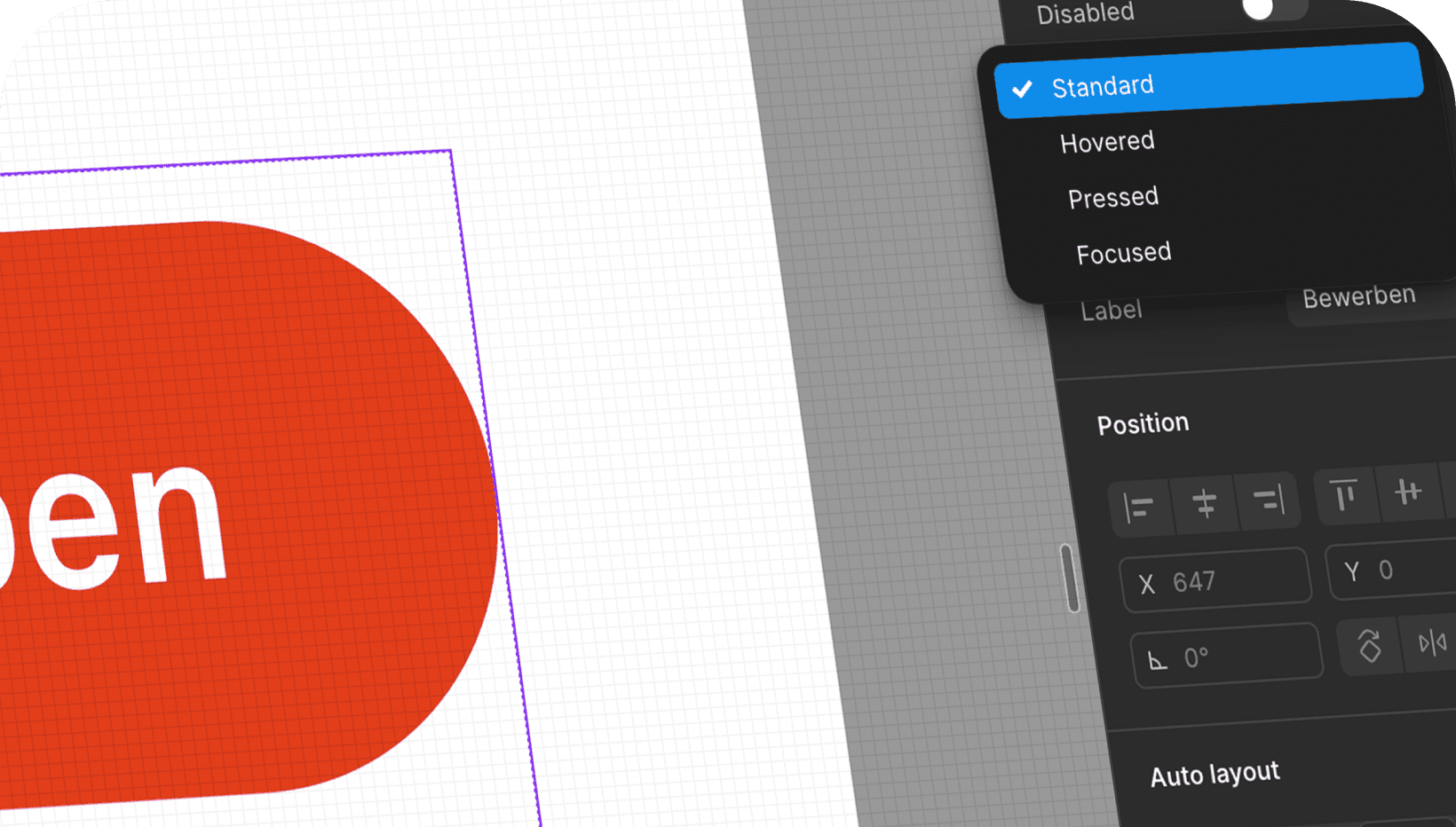
Detailed concept & UI
Translation of wireframes into a consistent and accessible UI based on the existing design system, with a focus on clear structures and the simplification of complex data models.

Testing & Iteration
Iterative validation of key workflows through feedback loops with specialist departments and the project team, as well as workshops with test users to gain qualitative insights.
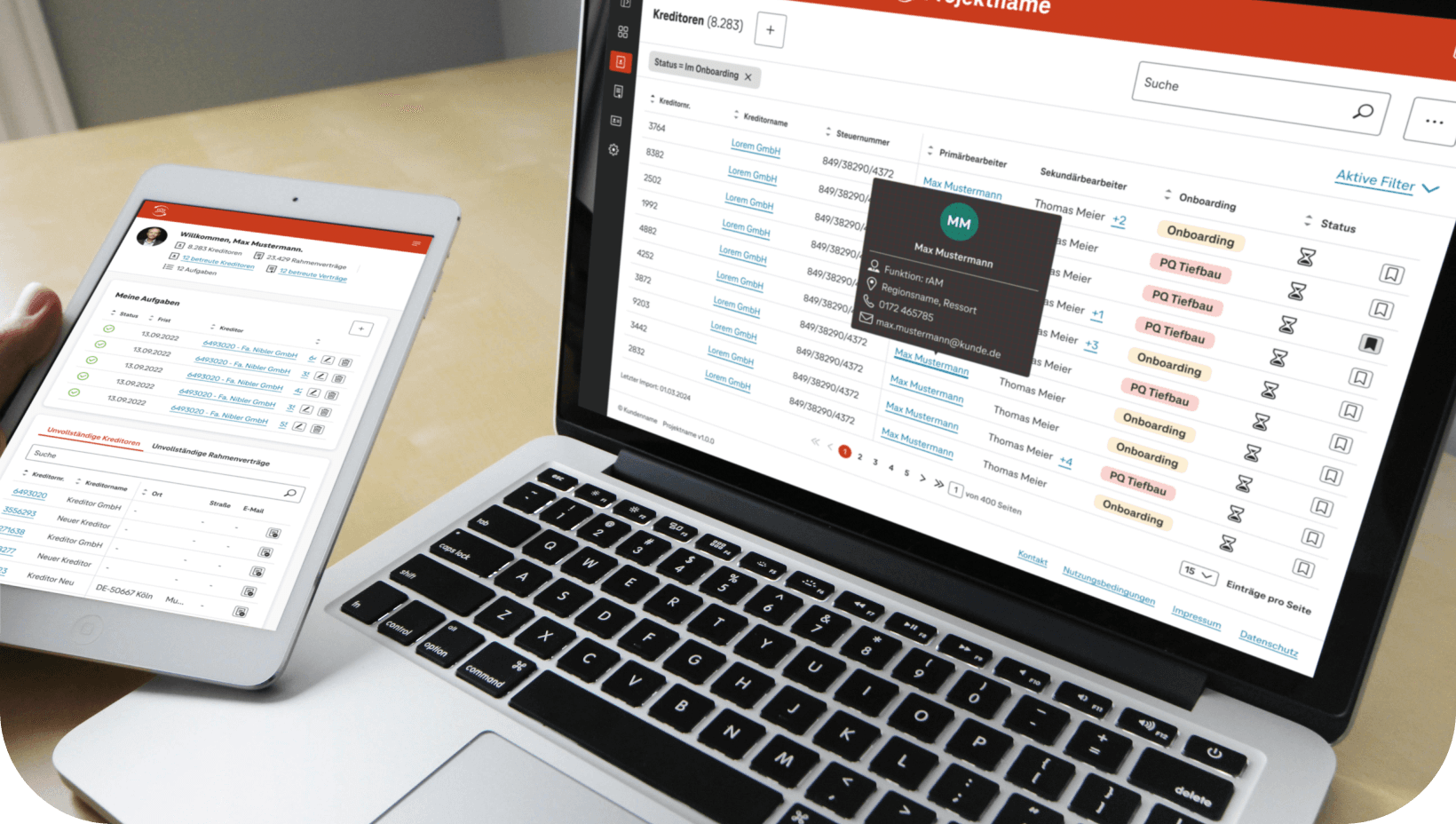
Handover & Support
Structured UX handoff to development with clearly documented specifications and continuous support during implementation, for queries and in quality assurance.
Key design decisions
Several strategic UX decisions were made during the project that had a significant impact on the user experience, product strategy and technical implementation. The following decisions show the most important course settings, including their effects and conscious trade-offs.
#1: Lists instead of tables in small viewports
No horizontal scrolling on mobile devices, improved readability and accessibility
More vertical scrolling, different structure in XL vs. S
#2: Modular, storable filter system
Highly precise search possible, efficient work with filter sets, customisation options
Higher UI complexity
#3: Discreet presentation of sensitive content
Data protection-compliant presentation, greater acceptance in terms of compliance
Need for reduction in content, loss of detail
Results & Product Impact
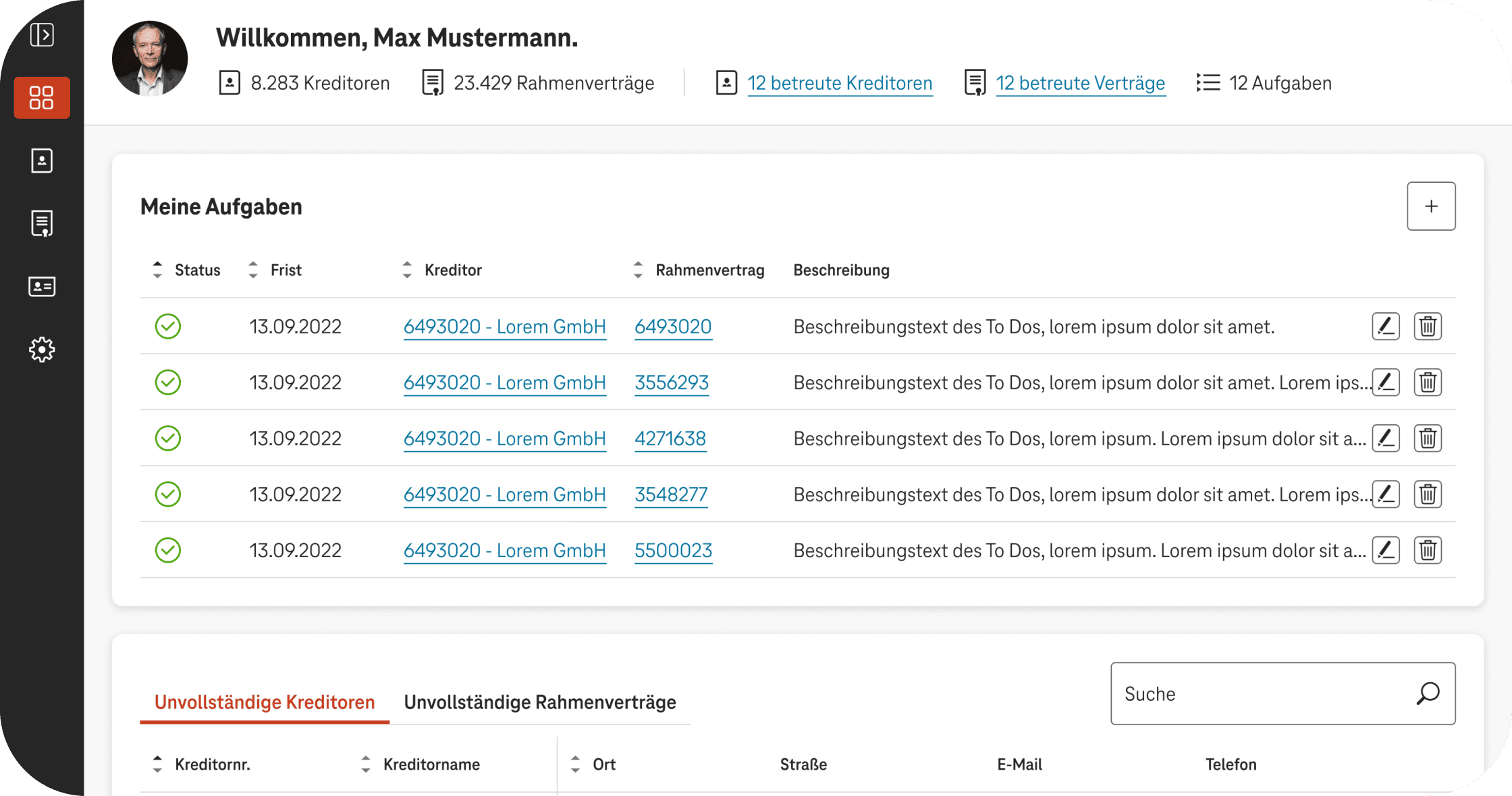
Establishment of a central supplier platform
All relevant supplier processes were bundled for the first time in an integrated platform with consistent UX.
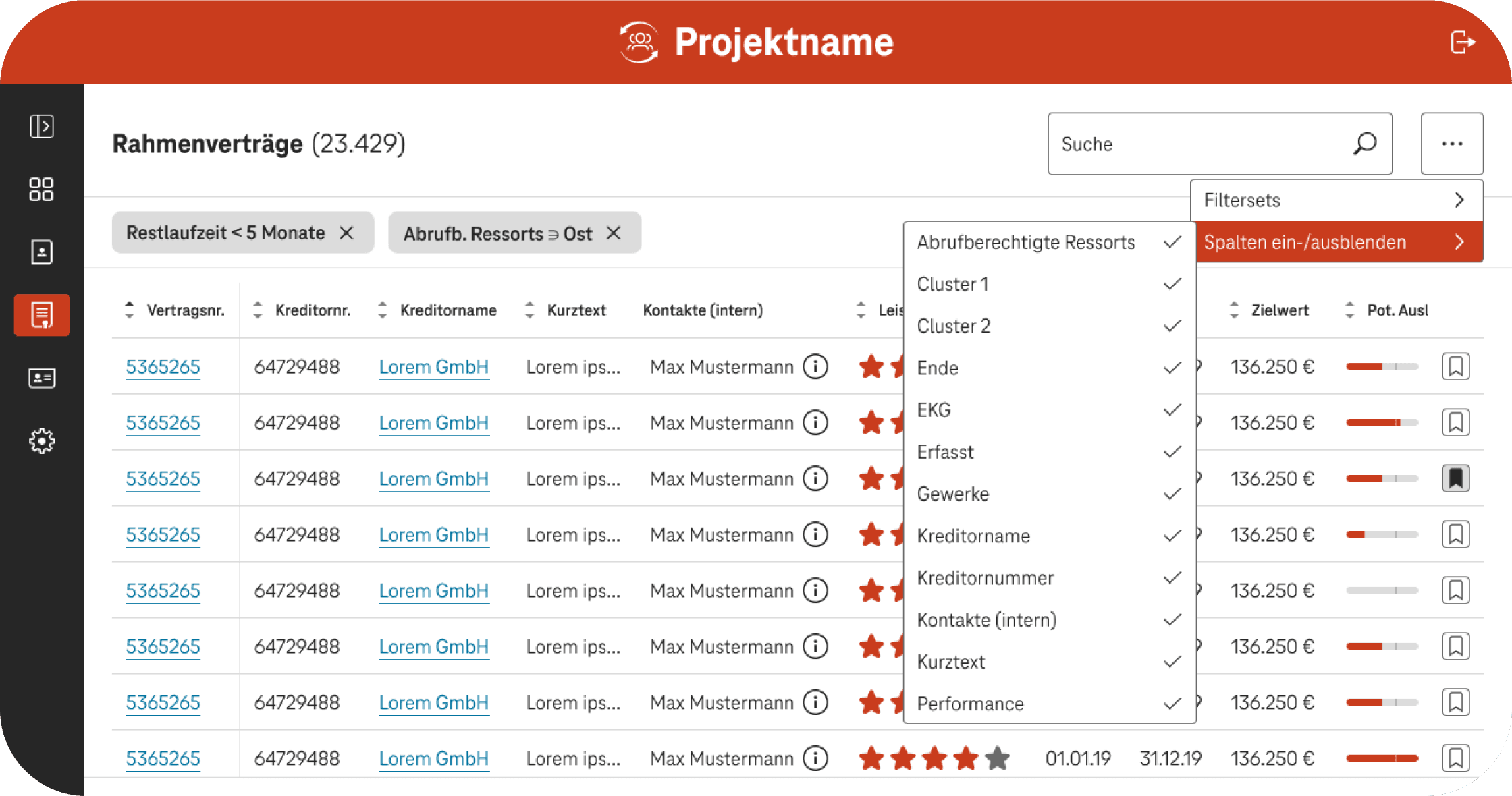
Reduced media breaks
Excel lists and parallel individual solutions were significantly reduced through consistent digital workflows.
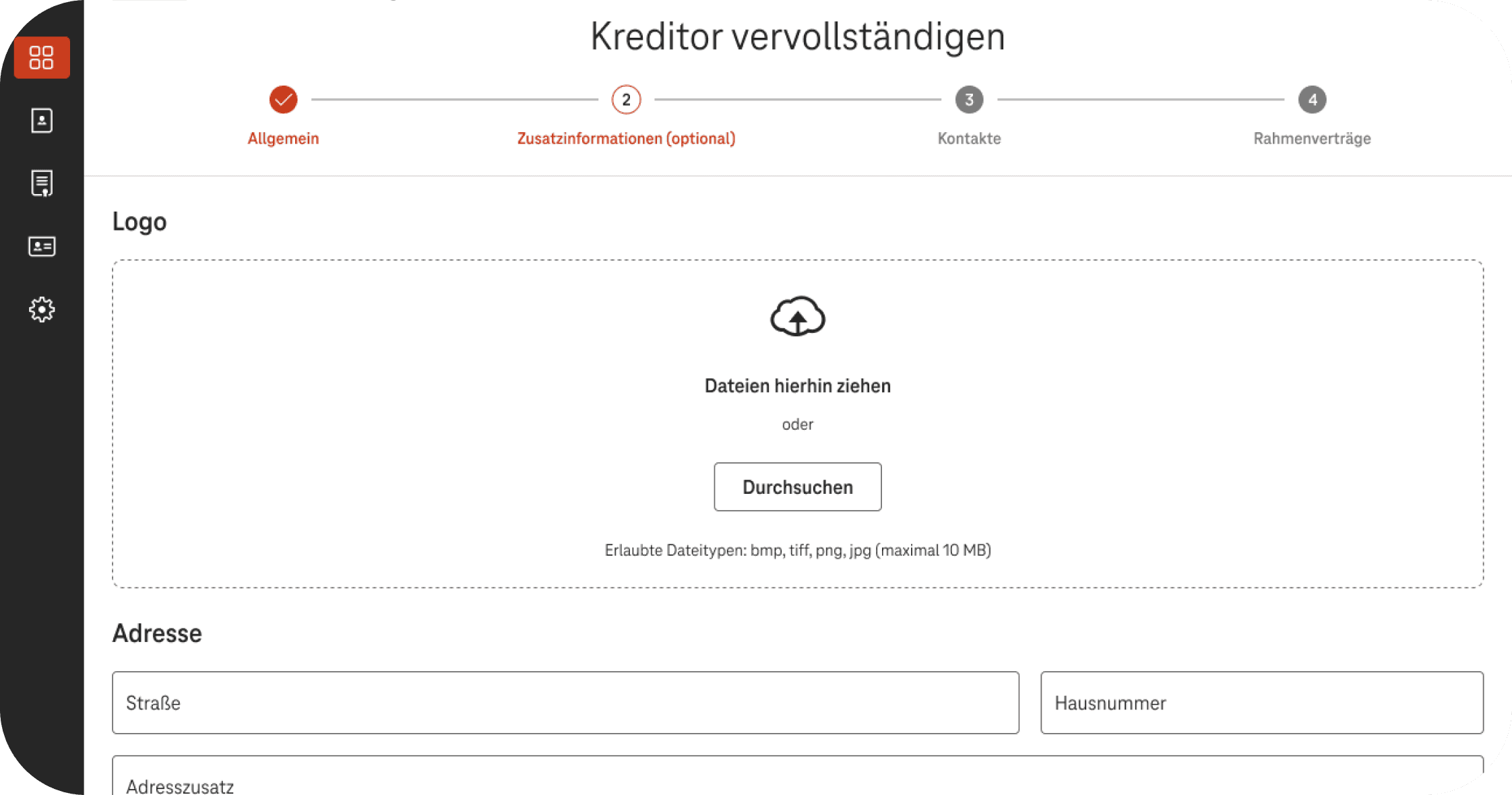
Improved data quality
Clear structures and defined maintenance processes ensure a consistent and reliable database.
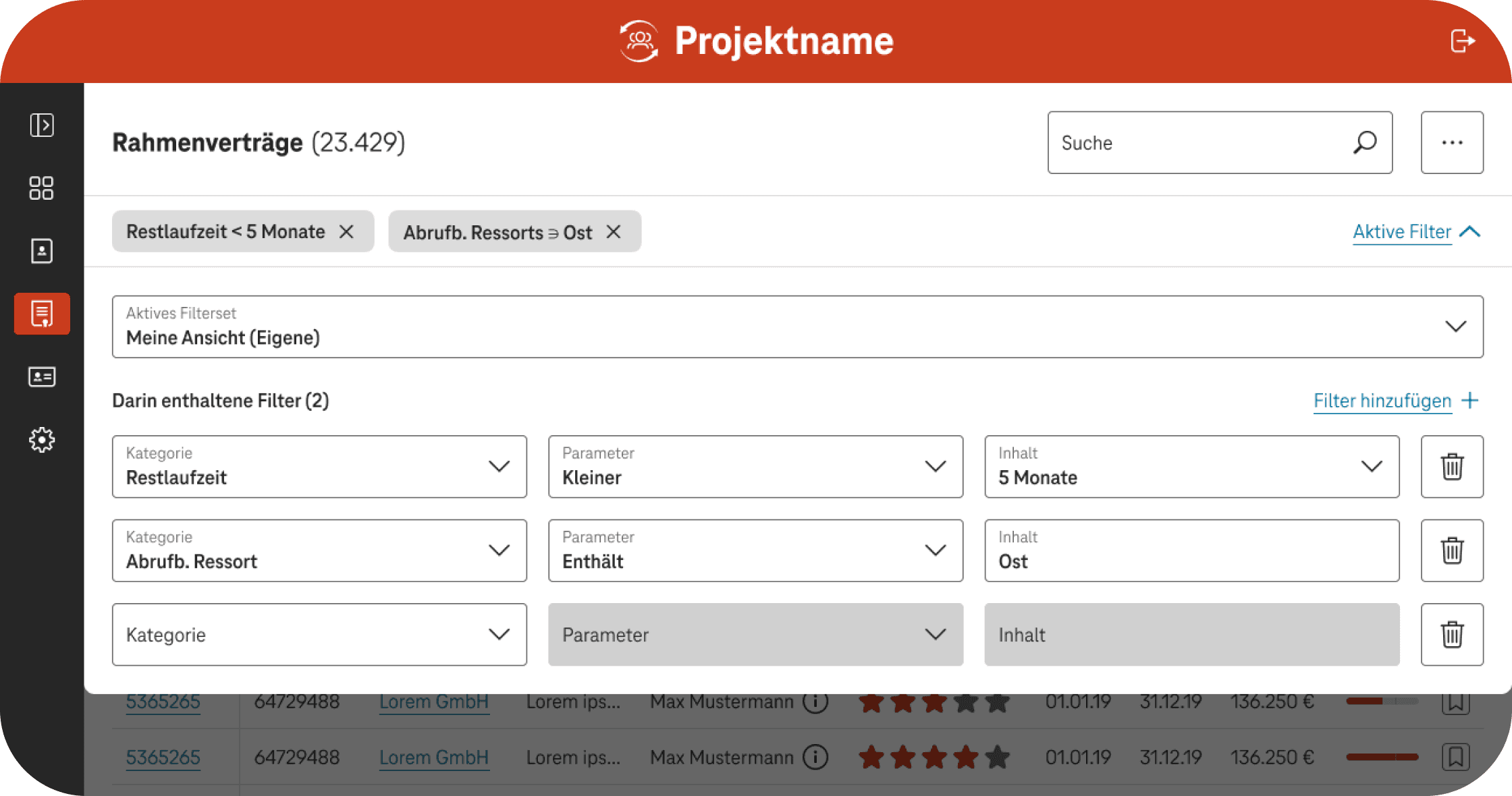
Customisable filter system
Status, responsibilities and dependencies are traceable throughout the system and can be viewed at any time.
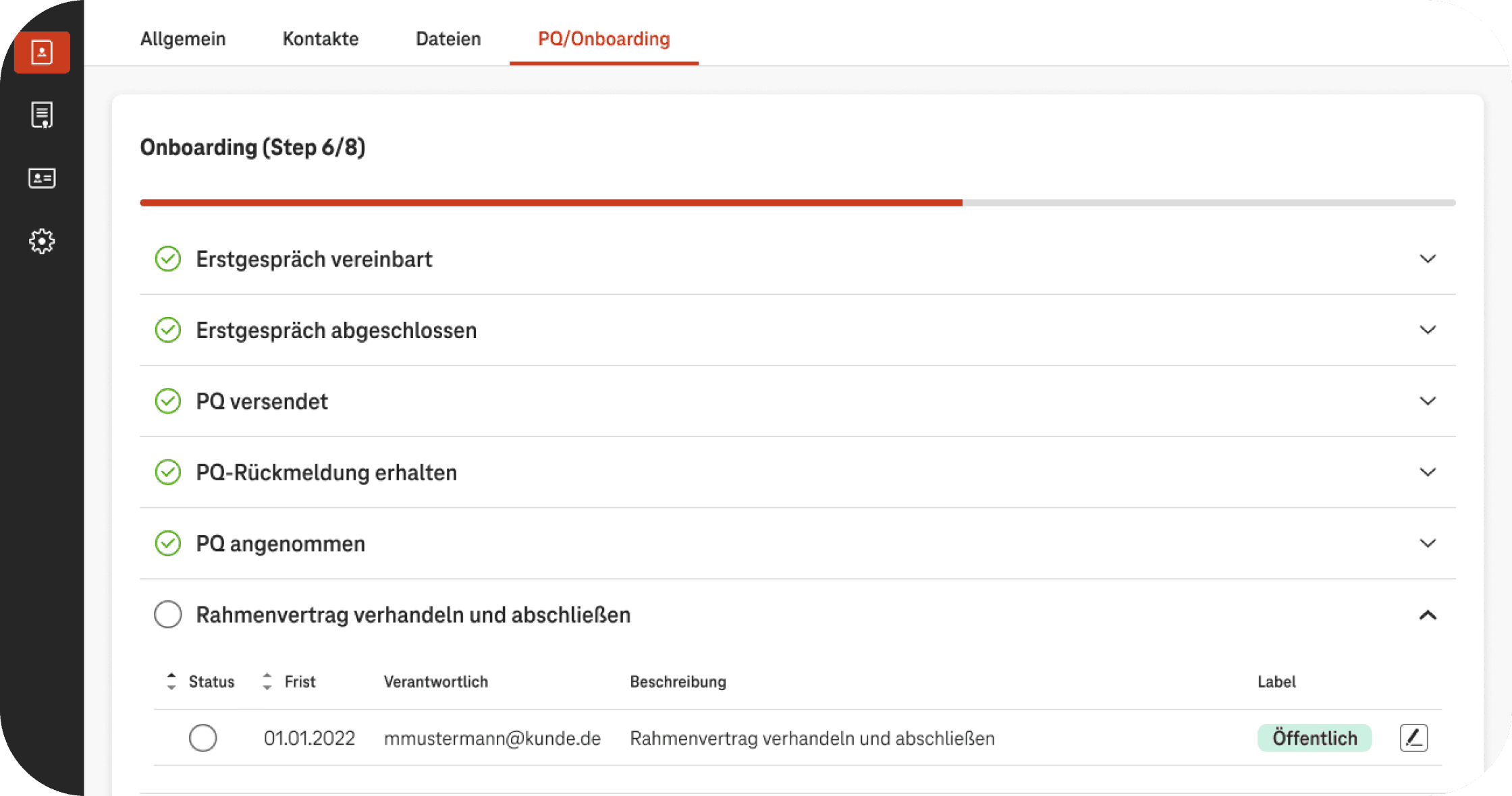
Greater transparency in processes
A powerful filter concept enables precise searches with combinable criteria and storable filter sets for efficient workflows.
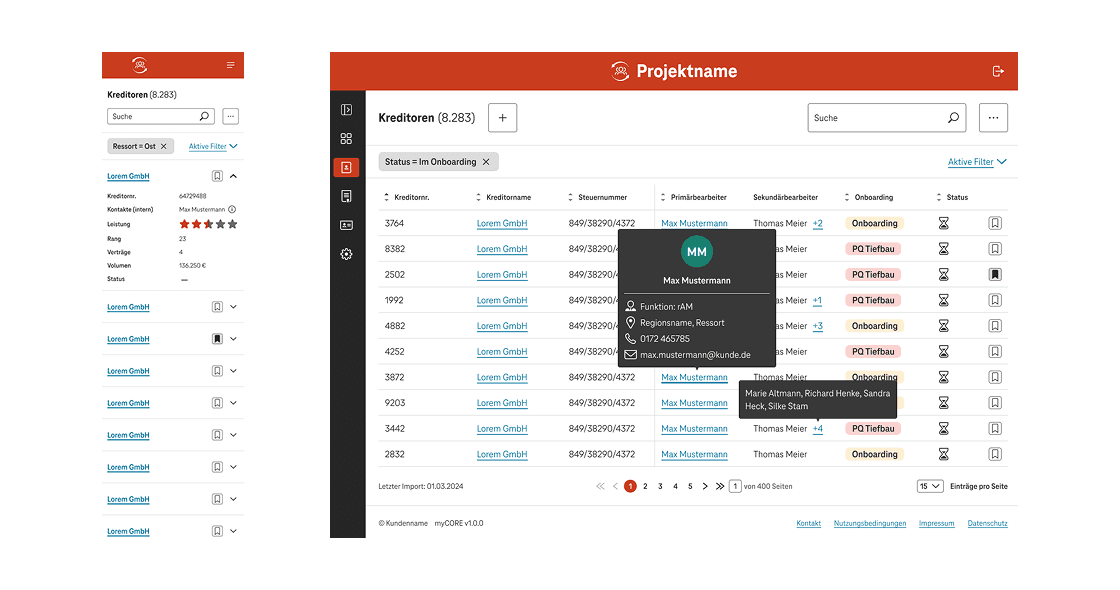
Accessible use across all viewports
Key functions and complex lists are accessible on all screen sizes (XL, L, M & S).
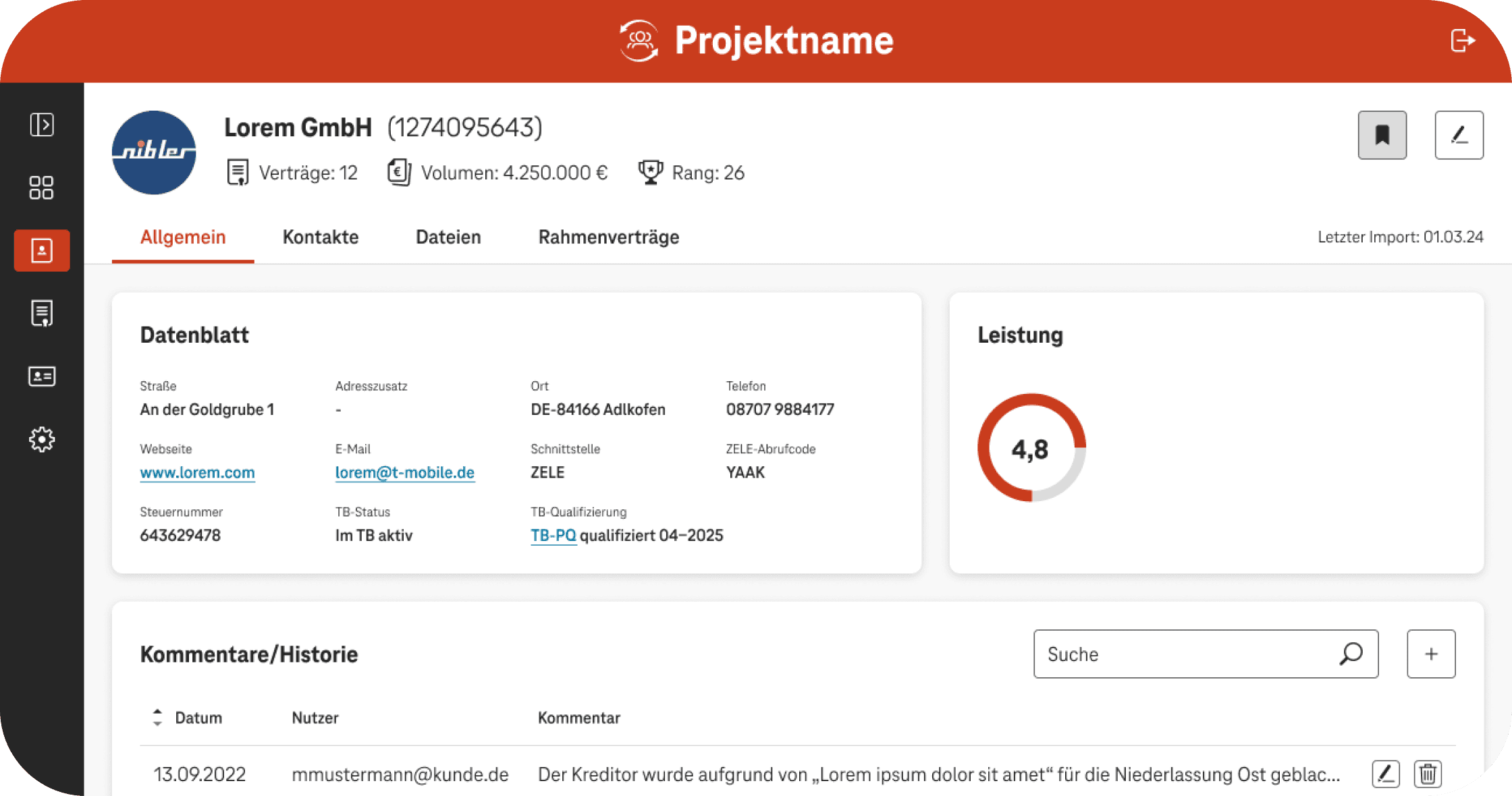
Scalable system basis
The UX architecture has been designed to be modular, allowing for seamless expansion with additional modules.
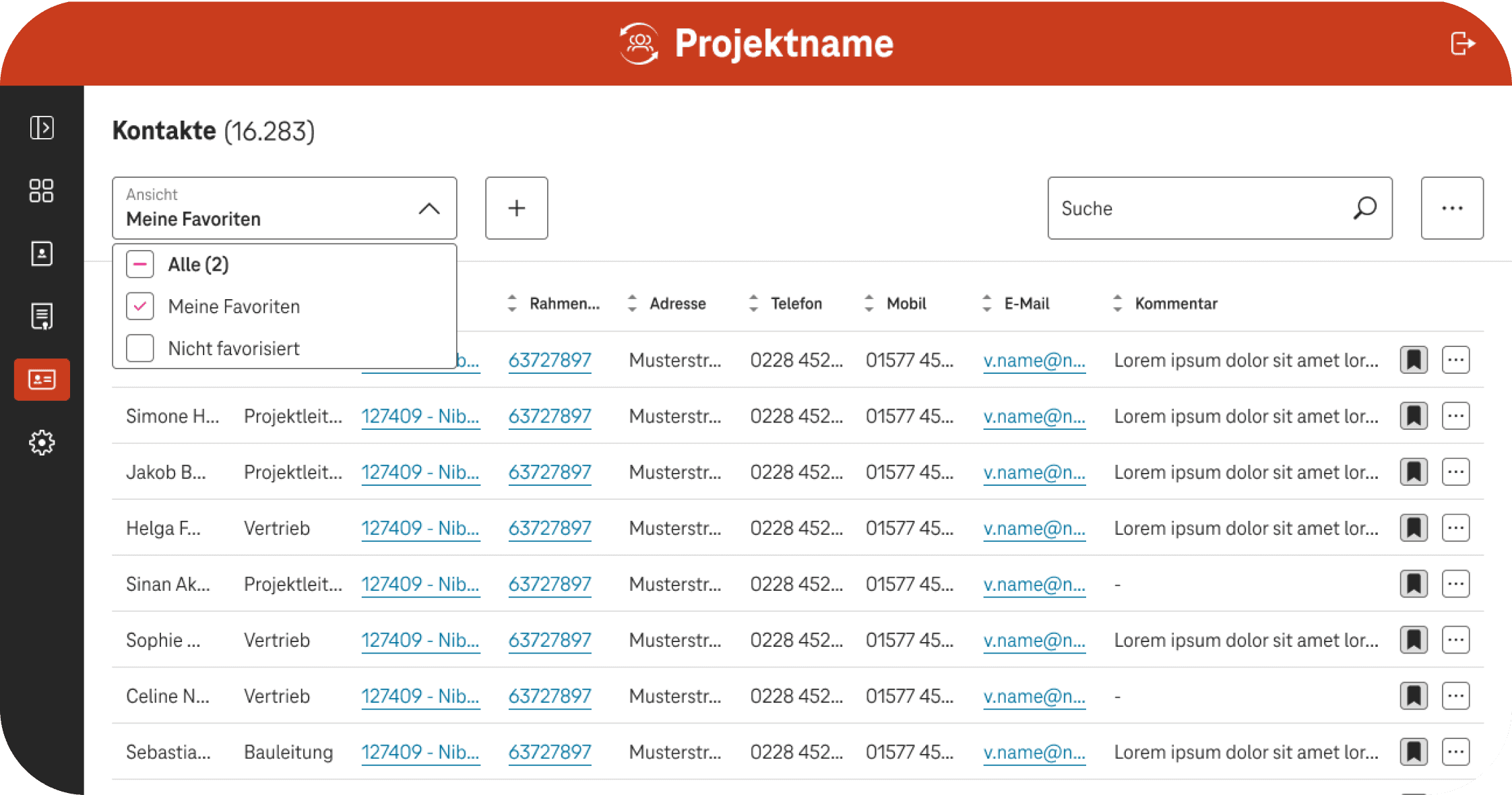
More efficient collaboration
A shared platform improves coordination between purchasing, specialist departments and operational teams in their day-to-day work.
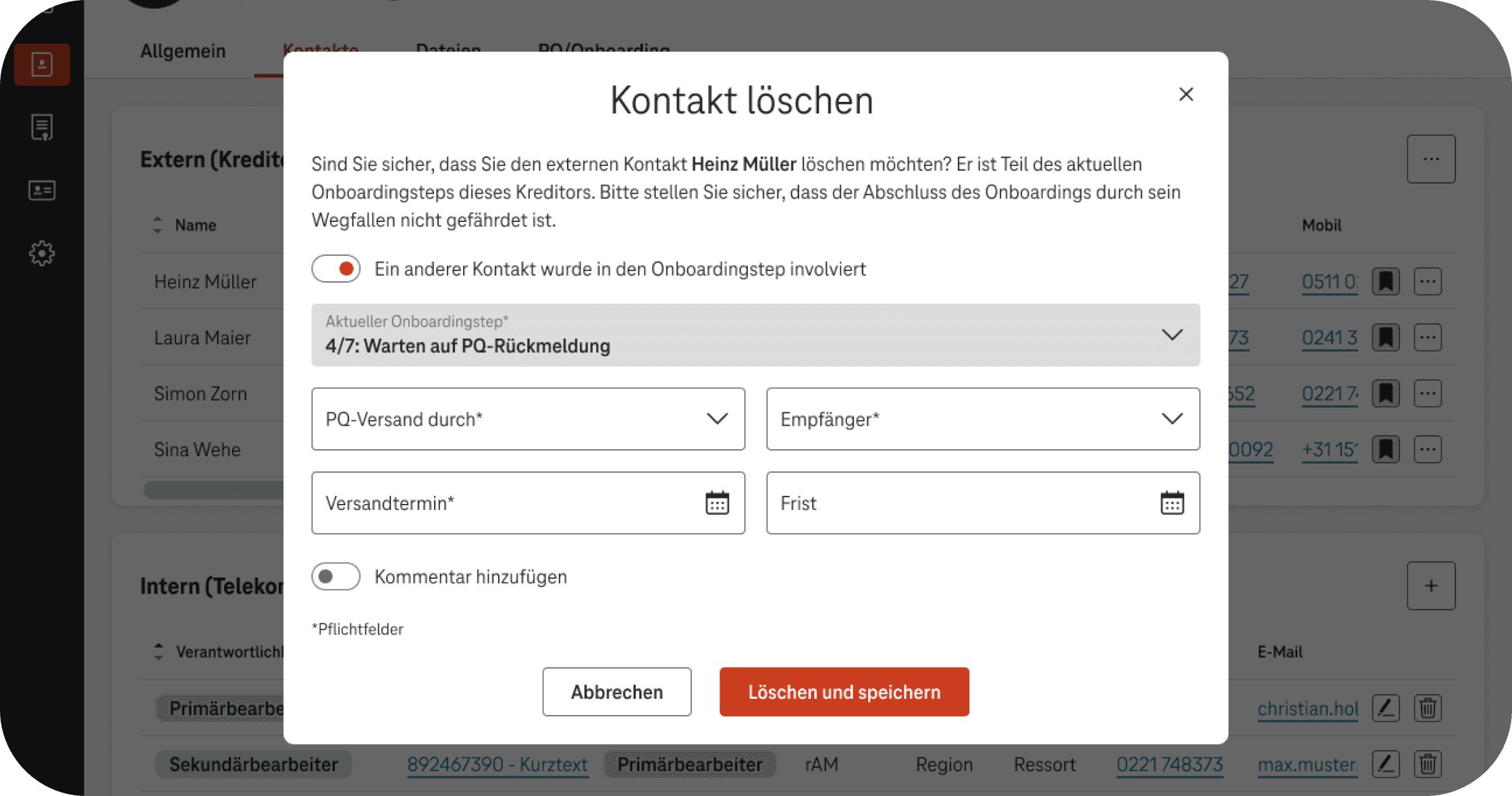
Replacement of legacy systems
The positive response led to the gradual replacement of additional legacy tools and other processes such as onboarding management.
Key learnings
Accessibility & data complexity as core UX factors
Accessible presentation and clear structuring of complex lists are crucial for the usability and efficiency of data-intensive systems.
Early visualisation as a basis for discussion
Early wireframes and prototypes made requirements tangible and helped to translate abstract discussions into informed decisions.
Stakeholder alignment as a design skill
Close coordination with specialist departments strengthens prioritisation, decision-making and understanding of technical dependencies.
Scalable structure pays off in the long term
A clean information architecture and clear workflow logic reduce friction losses and scaling problems later on.


